Composite Image Making
Digital compositing - is the process of digitally assembling multiple images to make a final image, typically for print.
In which conventional photographic techniques are used to manipulate images?
- Photoshop -
- Editing,
- Layers,
- Levels - details, lightens and darkens
- Saturation - muted colours
- Clone stamp, Healing
Research (of Artists and techniques)
For my research on composite image making, I will be looking at an artist called George Logan. He born in Bellshill, near Glasgow, Scotland, George studied at Blackpool College of Photography before moving to London where he is currently based. George is a muti-faceted talent, equally at home on location or in the studio, working with people, animals, locations or still life. His work is always imaginative, often poignant and not without a healthy dose of humour.
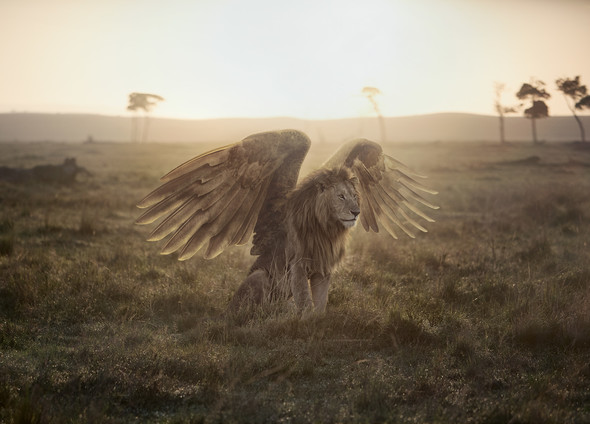
Here George uses Photoshop to create an image of a Lion with wings. The mythical animal (a griffin) in the image shows the strength and courage of the lion whilst the wings suggest youth. The Griffins are considered a version of winged lions. They’re typically viewed as guardians of sacred places implying that lions are the keepers of the land.


As composite image making is new to me, I don't think that my images will come out anywhere near as good as George's. Due to this, I will just be using two of my images that I have already taken and combining them. I will continue to work on creating images like George's as I find his images very interesting and they do inspire me to practise and keep trying in order to create images that look as natural and real as the photos above do.
Image Bank


Task 1
In this task we used layers to produce a composite image of three rubber ducks on the River Thames. We learnt about the masks, and how to make the object more transparent so that it looks like it was actually taken in the photo and not added in later, to make it look natural.
AO1: Develop ideas through sustained and focused investigations informed by contextual and other sources,
demonstrating analytical and critical understanding.
I feel that the artist research was helpful in this study as it helped me to understand the theory on Composite Images and made me look at the finer details when editing an image.
I feel that I have made a good final image using some of the techniques that George Logan however I would eventually like to extend my photoshop abilities and create photographs in the style of his.
I feel that I have made a good final image using some of the techniques that George Logan however I would eventually like to extend my photoshop abilities and create photographs in the style of his.
AO3: Record ideas, observations and insights relevant to intentions, reflecting critically on work and progress.
My idea for recording Documentary was to photograph my day to day life, surrounded by horses and
the jobs that come with them. I feel as though I was inspired by Henry Cartier-Bresson's work.
With reference to my best selected images: I feel that these images link to the topic and to the artist that I studied. however, in future work, I would experiment with the use of black and white images in order to create slightly more interesting images.
My idea for recording Composite images was to combine two of my previously taken images using different tools in photoshop, like George Logan.
With reference to my final images: I feel that as I used photoshop more I got better at making the two combined images look natural, like the photos were taken as one, although I still feel like I have a long way to go.
My first image that I practised with was just a simple photo that I liked of a road, with the trees surrounding it.

I then added the Snail shell into the photo. I tried to edit the two images, in order to make it look as natural as possible, however, I did not feel that this could be achieved as the two photos were taken in two very different lights. This caused the final image to look out of place. Plus, the edges are not as sharp as I wanted them to be.
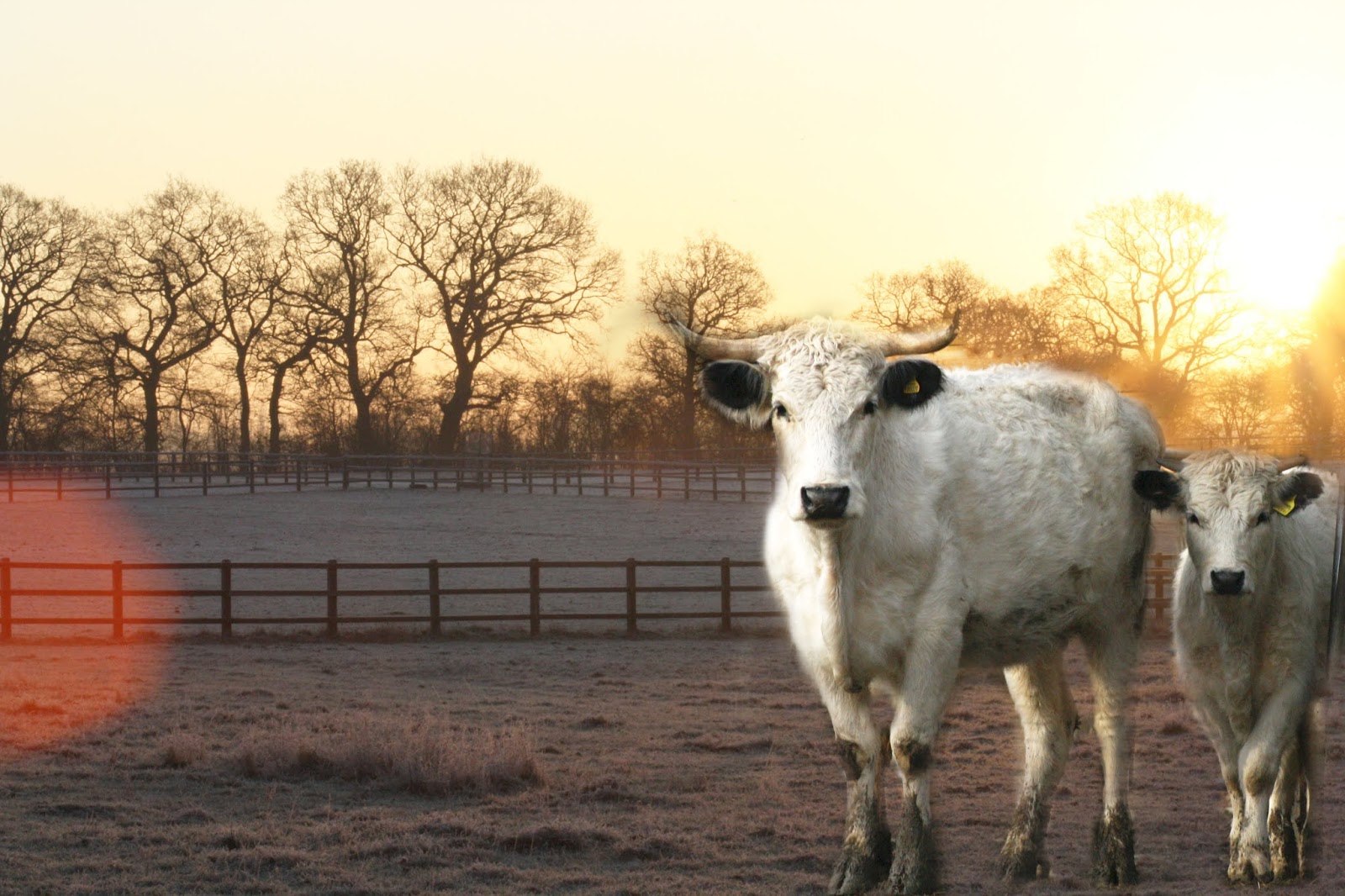
In the other image, I used a landscape photo that I had taken of a frosty morning. I then added in a cow and her calf. I prefer this final image out of the two as I think that although its not perfect, the editing is defiantly better.
AO2: Explore and select appropriate resources, media, materials, techniques and processes, reviewing and refining ideas as work develops.
To take my photos I used a Canon E10 1000D, with multiple lenses. I had to adapt my camera settings to each particular shoot and setting as being in winter the weather can change rapidly along with the light.
If I were to redo these images, I would go on a new shoot, capturing images in similar lights in order to create a better final image.
If I were to redo these images, I would go on a new shoot, capturing images in similar lights in order to create a better final image.
AO4: Present a personal and meaningful response that realises intentions and, where appropriate, makes connections between visual and other elements.
I believe that I have produced a strong series of images inspired by my research of Composite images and the images of George Logan. The final images produced were refined by developing the photo in photoshop using a range of techniques such as using the copy and paste tool and the stamp tool (whilst changing the opacity, flow and size of the brushes).
My composite images